Education
At MAIS, we incorporate Applied Behavior Analysis (ABA) as the foundation of our educational practice. Through ongoing observation of each child’s development and the analysis of learning data, we design personalized learning experiences that support every student’s growth and success.
What is Applied Behavior Analysis (ABA)?
Applied Behavior Analysis (ABA) is a scientific approach grounded in the field of behavior analysis.
ABA focuses on the relationship between behavior and the environment. It carefully examines how interactions, teaching methods, and environmental arrangements influence learning and development. By applying these scientific principles in educational and everyday settings, ABA aims to promote socially significant behaviors.
ABA is widely known for its application in the education of individuals with Autism Spectrum Disorder (ASD). However, its scope extends far beyond this area and is utilized across various fields, including education, parenting, organizational management, and healthcare.
At MAIS, “socially significant behaviors” refer to the skills that enable individuals to thrive in society—such as academic skills, communication abilities, self-management, and interpersonal skills.
MAIS integrates these scientific principles as a foundation of our educational approach. We respect each student’s individuality and pace of development while creating a safe and supportive environment where every learner can grow with confidence.
Educational Features
1
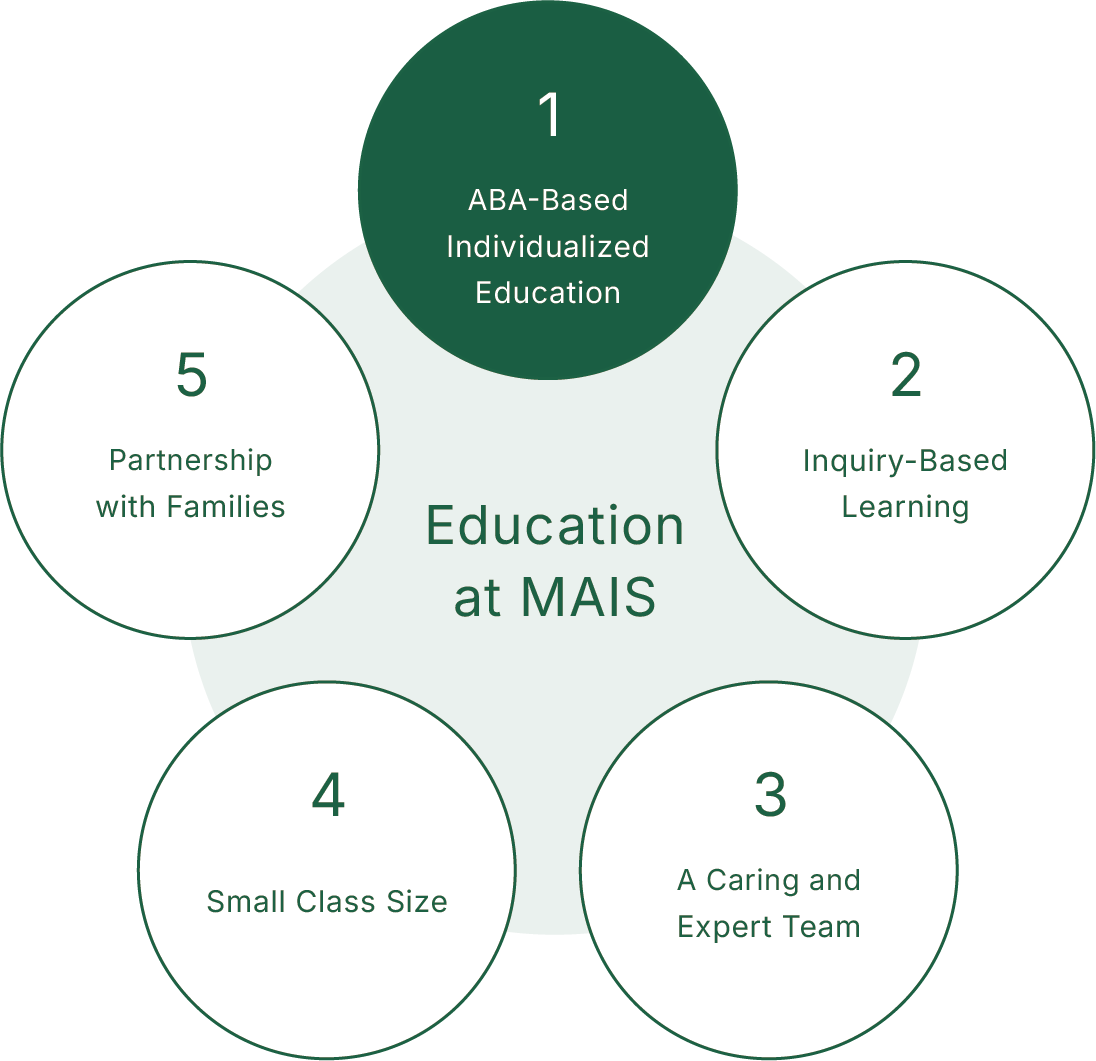
ABA-Based
Individualized Education
Through daily observation and learning data, we provide personalized learning experiences that help every child grow with confidence.
2
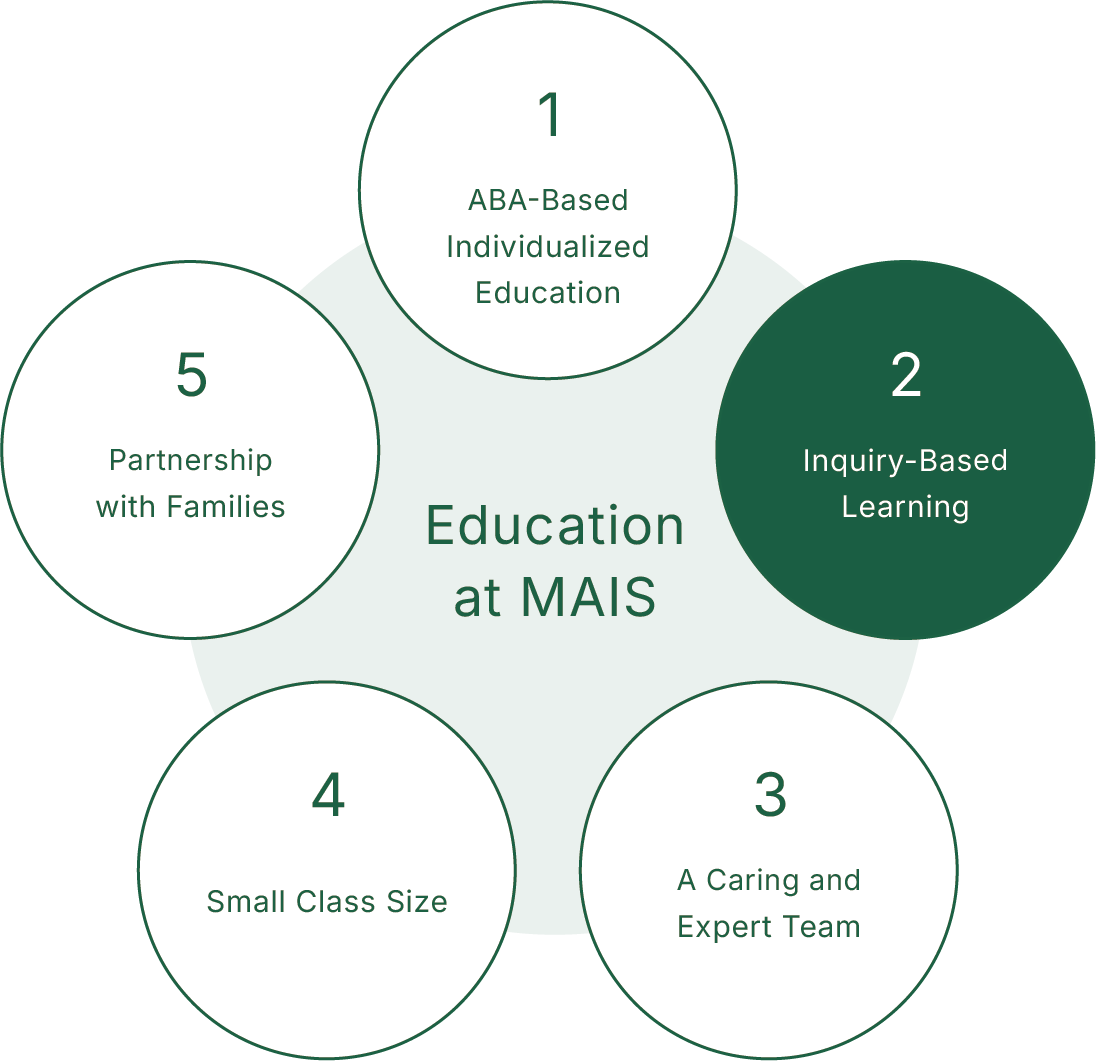
Inquiry-Based Learning
At MAIS, we combine ABA-based education with inquiry-based learning, empowering children to think independently, explore their interests, and develop a lifelong love of learning.
3
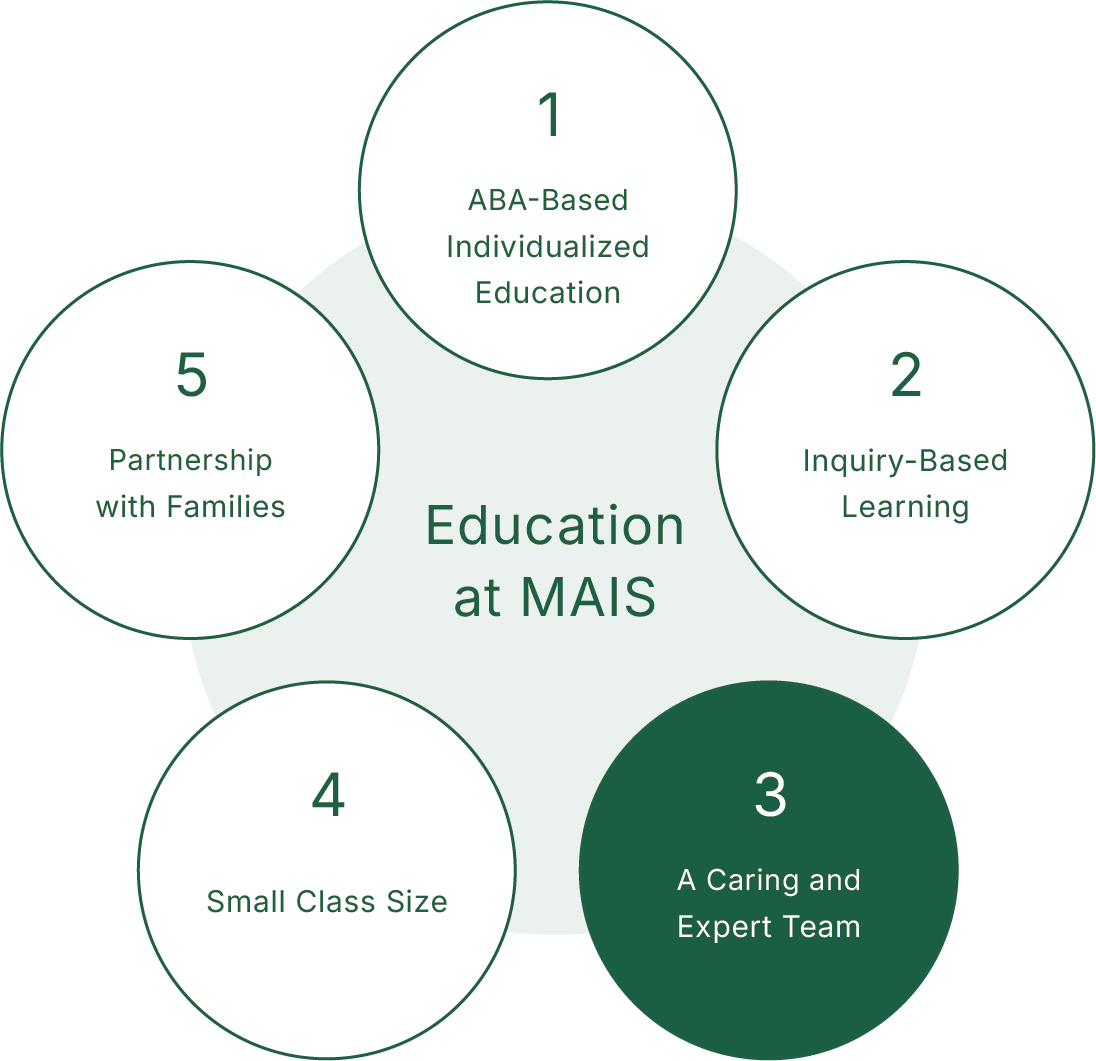
A Caring and Expert Team
BCBA-D® and RBT® certified professionals collaborating with educators.
4
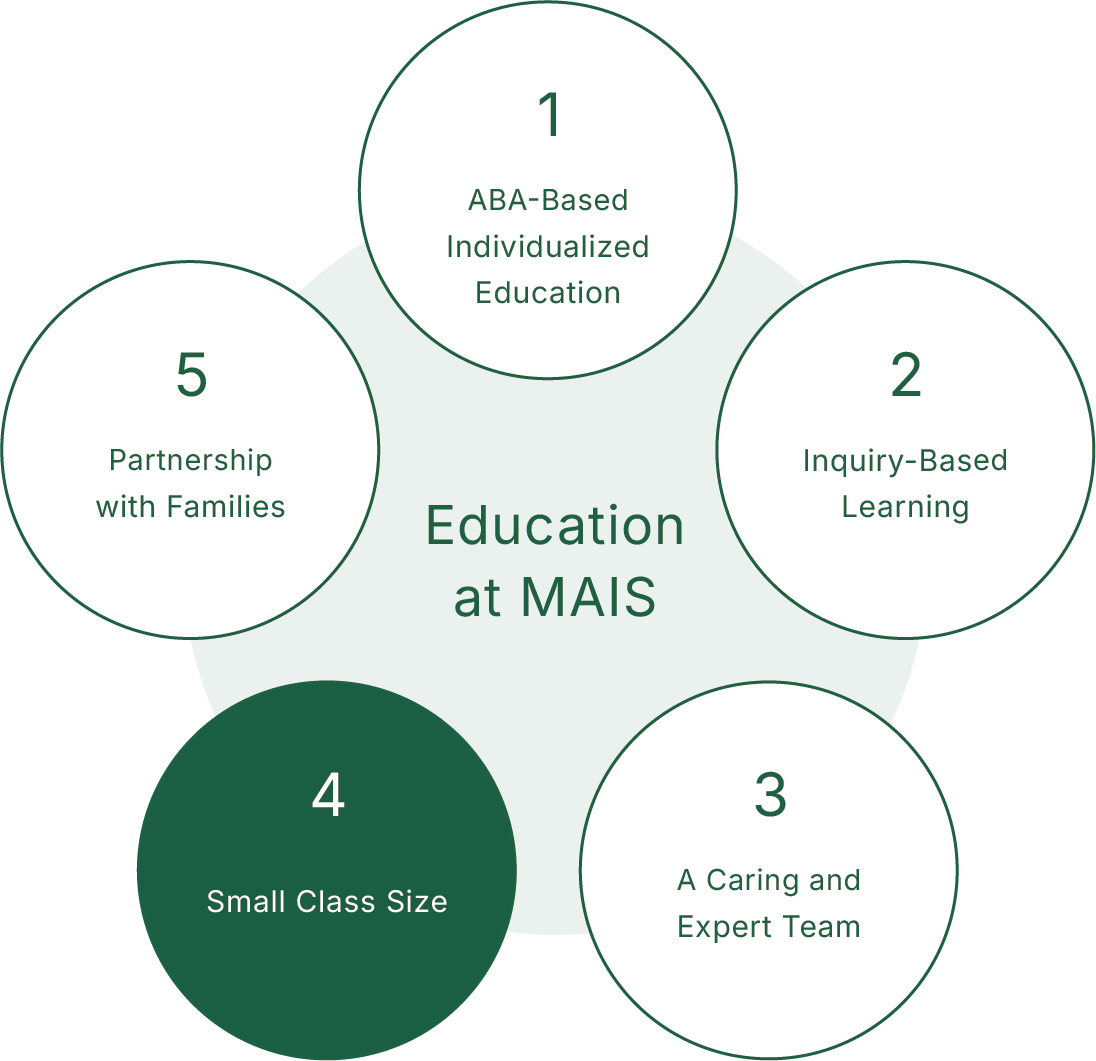
Small Class Size
A safe and engaging learning environment with low student–teacher ratios.
5
Partnership with Families
Consistent and transparent communication with families for cohesive support.
Our Curriculum
Learning at MAIS
Students at MAIS engage in learning across the following subject areas:
English
Japanese
Mathematics
Inquiry (integrated science & social studies)
Social skills & Self-management skills
Physical Education
Art
Music
English
English is developed not as a “foreign language,” but as a language of learning.
We build foundational skills step by step through:
・ Phonics (understanding the relationship between sounds and letters)
・ Vocabulary and sentence structure
・ Creative Writing
・ Reading Comprehension
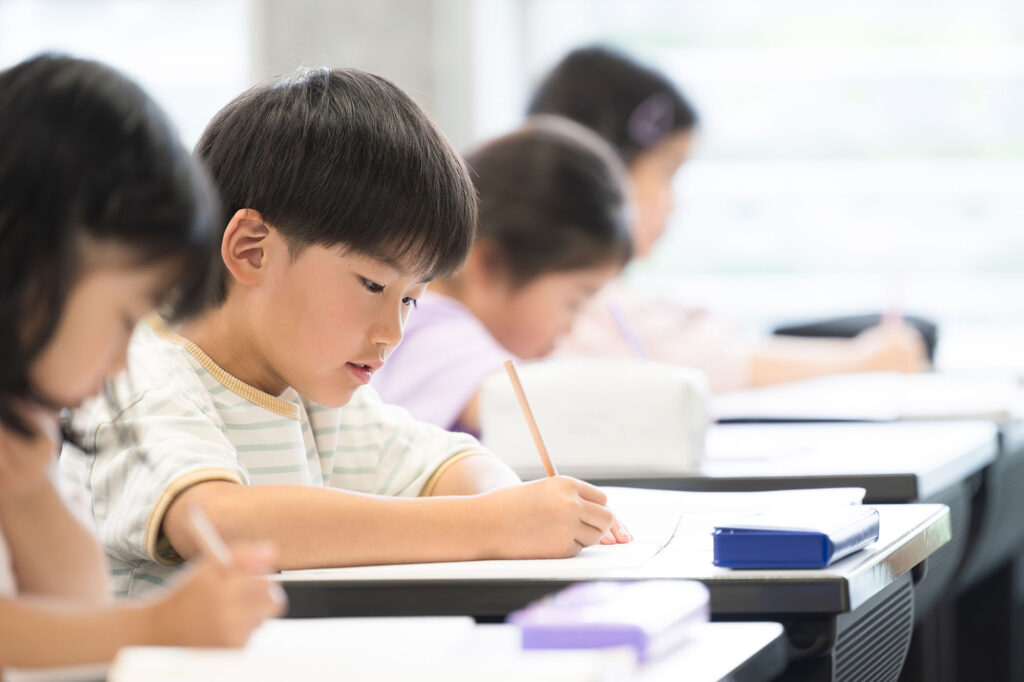
Students receive small-group instruction tailored to their individual proficiency levels, from beginner to advanced learners.
Japanese
Our Japanese curriculum follows the Japanese national Course of Study. Students develop strong literacy foundations through:
・ Foundational character instruction (Hiragana, Katakana, and Kanji)
・ Vocabulary and grammar
・ Composition and structured writing
・ Reading comprehension (narrative texts, informational texts, poetry, and more)
Instruction is carefully adapted to each child’s developmental stage to ensure a solid foundation in Japanese reading and writing.
Mathematics
We follow the Japanese national curriculum in mathematics (Tokyo Shoseki), with a strong emphasis on conceptual understanding and problem-solving skills.
Key areas include:
・ Numbers, quantity, and geometry
・ Measurement and data analysis
・ Upper-grade applications (ratios, proportions, polygons, area, volume, etc.)
Instruction is differentiated according to each student’s pace and level of mastery.
Inquiry (integrated science & social studies)
Every 3–4 weeks, students engage in an inquiry unit that integrates science and social studies. Learning extends beyond the classroom through field experiences and hands-on activities. We adopt the inquiry-based learning approach of the International Baccalaureate (IB) Primary Years Programme (PYP), exploring big ideas and transdisciplinary themes. Students investigate concepts, collaborate with peers, and connect learning to real life. We emphasize not only acquiring knowledge, but also learning how to learn.
Social skills & Self-management skills
At MAIS, we intentionally nurture age-appropriate social understanding and self-management skills.
Students learn how to
・ Interact positively within a group
・ Consider others’ perspectives
・ Express their thoughts clearly and appropriately
・ Regulate their emotions and behavior
・ Persist in completing tasks
Our goal is not simply to teach children who follow rules, but to nurture individuals who understand themselves, develop confidence, and feel secure and empowered to be themselves within society.
Physical Education
Through active movement and play, students build physical strength, teamwork, and a spirit of fair play.empowered to be themselves within society.
Art
Students develop creativity and self-expression, learning to communicate ideas and emotions through visual forms.
Music
Through rhythm, melody, and collaborative performance, students cultivate sensitivity, expression, and the joy of creating together.